
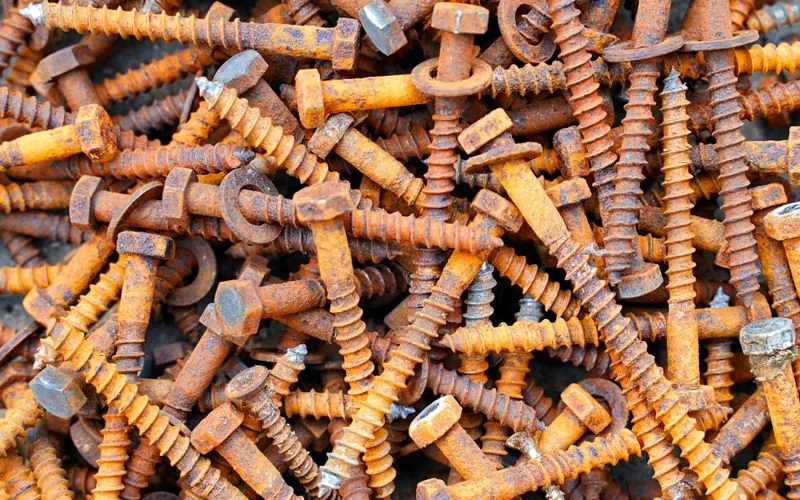
Sydney's climate — high humidity, coastal salt air across a significant part of the metro, and warm temperatures year-round — is more corrosive than most Australian cities. Mild steel that's painted or galvanised in Melbourne may need attention in Sydney within half the time. Understanding what level of rust damage can be welded and what can't is important before spending money on repairs that won't hold.
Surface Rust vs Structural Rust — The Critical Distinction
Surface rust (also called atmospheric corrosion or red rust) affects the outer layer of the steel. It's visually obvious — orange-brown staining, powdery deposits, discolouration — but the underlying metal hasn't lost significant wall thickness. Surface rust is treated by abrasive blasting or grinding, primer, and repainting. Welding is not required and is not helpful.
Structural rust is where the corrosion has penetrated into the wall thickness of the metal, reducing the cross-sectional area and load-carrying capacity. Pitting, holes, and sections that are soft or crumble when probed indicate structural rust. This is where welding repair becomes relevant.
The test: a sharp screwdriver or punch pressed into the suspect area. Surface rust resists penetration; structurally compromised metal is soft, thin, or hollow-sounding. On hollow sections (RHS, tube), tapping with a hammer produces a different sound over structurally compromised sections — thicker sound vs hollow, resonant sound where the internal rust has eaten away the wall.
Types of Rust Repair We Do
Patch Plate Welding
For localised rust-through — a hole or pitted section on an otherwise sound structure — the repair involves cutting out the compromised material back to sound metal, then welding in a new piece of the same profile or a flat plate over the void.
Key requirement: the surrounding metal must be structurally sound. We won't weld a patch onto steel that has only 30% of its original wall thickness remaining — the weld will hold but the adjacent metal will fail. We check the surrounding area with a punch test and sometimes a digital caliper before committing to a patch repair.
Section Replacement
Where rust damage is extensive along a section of tube or flat bar — not just a single hole but a stretch of compromised metal — the better repair is cutting out the full damaged section and welding in a new section of matching profile. This is more labour-intensive than a patch but produces a cleaner, more durable result. A cut-and-splice repair on a gate horizontal rail typically costs $320–$500 depending on length.
Internal Rust Treatment Before Welding
Hollow sections (RHS gate frames, fence rails, trailer cross-members) rust from the inside when moisture enters through failed end caps or unsealed cuts. Before welding, we clear as much internal rust as possible and treat accessible areas with a rust converter. After welding, we seal the ends with welded caps or plug welds to prevent recurrence.
What Can't Be Saved by Welding
Welding cannot restore metal that has lost structural integrity across a significant area. Specific situations where replacement is the honest recommendation:
- Widespread section thinning. If the wall thickness across a significant length is below half the original specification, patch repairs won't hold and section replacement becomes impractical. Full component replacement is the answer.
- Internal corrosion that has hollowed the section. Some older gate and fence frames have completely rusted through internally — the outer surface looks intact but the tube has lost most of its load-carrying capacity. These can't be reliably repaired by welding.
- Corrosion at structural connections. Rust at the weld zone between two members (post-to-plate, cross-member-to-rail) is the worst case — the weld itself is compromised, and the base metal at the connection is too thin to support a new weld. Full section replacement is required.
- Pool and marine environment failures in mild steel. Mild steel in a pool or marine environment that has been left without maintenance for more than 5–8 years typically has systemic rust through the structure. Repair is possible but rarely cost-effective — replacement in 316 stainless or aluminium is the smarter investment.
After the Repair: Protecting the Steel
A weld repair removes the corrosion protection in the heat-affected zone. The bare steel at and around the weld must be re-protected before it begins to rust again — which in Sydney's climate can happen within weeks if left bare.
- Cold galv spray applied immediately after the weld cools. This is the minimum for galvanised steel structures — it restores the zinc layer that was burned away during welding.
- Zinc-rich primer for painted steel. We apply this to the weld zone before leaving site.
- Customer responsibility for topcoat. We protect the weld zone; the customer is responsible for applying the finish coat (paint, powder coat) within a reasonable timeframe. We'll recommend a timeframe based on the environment.
For metal selection guidance that avoids the rust problem in future (stainless, aluminium, or correctly protected mild steel), see our material guide. For gate-specific rust repairs, see the gate repair guide. Full rust repair service details available. Call 0426 829 762 or send photos — we can assess repair viability before attending.