
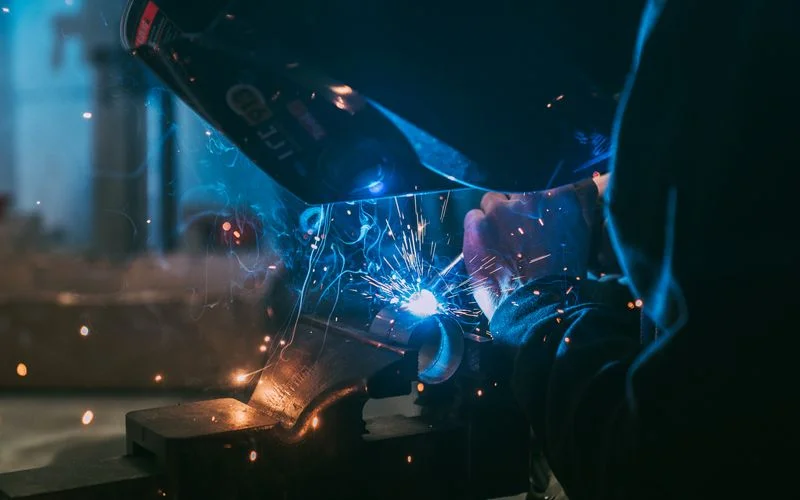
Trailers take a beating — heavy loads, rough roads, years of vibration fatigue. Most trailer frames are mild steel, which means cracks, failed welds, and rust damage are a normal part of ownership if you're using the trailer regularly. The good news: most structural trailer repairs can be done on-site with a mobile welder, without removing the trailer from your property or towing it to a workshop.
Common Trailer Weld Failures
Chassis Rail Cracks
The two main chassis rails take the full bending load when a trailer is loaded. Stress concentrations at cross-member junctions, hitch mounts, and axle mounts are the most common crack locations. A crack here is a serious structural failure — the trailer should not be towed until it's repaired.
The repair: clean back the crack with a grinder to establish full penetration, V-groove the crack, weld with root and cap passes, then add a reinforcing plate over the repair zone to prevent re-cracking in the same location. For a fatigue crack (one that has propagated through the full wall thickness), a good repair adds years of life if done correctly. A poor repair — simply running a bead over the crack without proper prep — will re-crack at the same point.
Drawbar Cracks and Breaks
The drawbar — the A-frame or tongue assembly that connects the trailer to the tow hitch — takes enormous tension and bending loads. Drawbar failures include cracks at the drawbar-to-chassis junction (a common fatigue location), cracked hitch coupling mounts, and sometimes full drawbar fractures after impact or overloading.
Drawbar repair is structural welding. The repair weld must be at least as strong as the parent material, and the geometry of the repair must not introduce stress concentrations. We weld drawbar repairs with full penetration welds and reinforcement gussets at the junction points.
Cross-Member Failures
Trailer cross-members distribute load from the deck to the chassis rails. Failed welds at cross-member ends, cracked cross-member sections, and buckled cross-members from overloading are all repairable. Replacing a single cross-member is straightforward — cut out the damaged section, fit a new section of the same profile, weld both ends.
Axle Mounting Failures
The axle mounts — whether leaf-spring hangers, torsion axle brackets, or welded plate mounts — must carry the full dynamic load of the trailer in motion. Failed welds at axle mounts can cause axle shift, which affects wheel alignment and can be a roadworthy failure. Repair involves grinding back the failed weld, re-fitting the mount in the correct position, and welding with full penetration.
Deck Rail and Tiedown Point Failures
Structural deck rails, corner posts, and welded tiedown points are lower risk in terms of trailer safety than chassis failures, but still need repair before loading. Failed tiedown points are a load restraint issue under the National Heavy Vehicle Regulator (NHVR) standards — even for light trailers, securing loads correctly is a legal requirement.
What Makes a Trailer Roadworthy After Welding?
In NSW, trailers are subject to roadworthy (vehicle inspection) requirements. For a trailer that's had structural welding, the relevant questions for a future inspection are:
- Is the repair structurally sound? A Visual inspection for cracks, incomplete fusion, and gross distortion. A competent weld will pass this.
- Has the geometry been maintained? Axle alignment, drawbar angle, and chassis straightness are checked. A weld repair that has introduced distortion into the chassis may cause alignment issues.
- Are any safety-critical components functional? Lights, brakes (if fitted), coupling, safety chains, tiedown points.
For trailers that have had significant structural repair, it's worth having the trailer inspected at an authorised inspection station (AIS) after the welding is complete, both for your own peace of mind and to document the repair. We can provide details of the work done to support that inspection.
Note that heavily modified trailers or trailers with significant structural alterations may require engineering certification under the NSW Roads and Maritime Services (now Transport for NSW) modification guidelines. We'll flag this if the scope of repair puts the trailer into modification territory.
Can the Repair Be Done On-Site?
For most trailer repairs, yes. We typically work on trailers at the customer's property — driveway, shed, or paddock. What we need:
- Access to the repair zone — trailer unloaded and positioned so we can work under or around the chassis
- A power outlet within 20m, or we bring a generator
- Adequate ventilation (no confined spaces without appropriate safety protocols)
Workshop transport is only necessary if the trailer needs straightening beyond what can be assessed on-site, or if the repair requires jig work to maintain geometry. For most crack repairs and weld failures, on-site is fine.
Trailer Repair Cost Guide — Sydney 2026
- Single chassis rail crack repair (with reinforcement plate): $380–$580
- Drawbar crack repair (full penetration + gusset): $420–$700
- Cross-member replacement (cut and weld): $280–$450
- Axle mount re-weld (single): $320–$520
- Tiedown point repair (4 points): $280–$480
- Multiple structural repairs (full trailer assessment): Quoted on inspection
For urgent trailer failures — broken drawbar before a planned trip, cracked chassis discovered at load — see our emergency welding guide for same-day response. Call 0426 829 762 or send photos for a quote. For the full mobile welding service covering Sydney.