
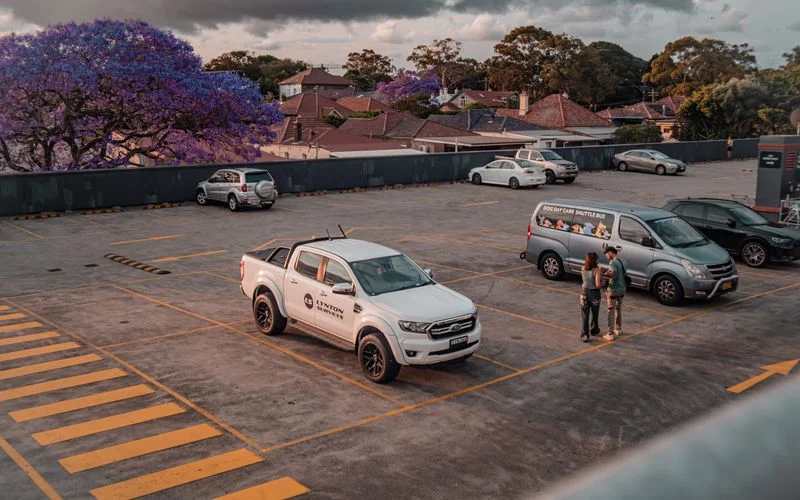
Aluminium is everywhere in working vehicles and recreational boats — lightweight, corrosion-resistant, and strong enough for most applications. When it cracks or fails at a weld, though, it needs a welder with the right equipment and experience. You can't weld aluminium with a standard MIG setup — it requires an AC/DC TIG machine, argon shielding, and aluminium-specific filler wire. Most mobile welders don't carry this equipment. We do.
Aluminium Ute Tray Repairs
Aluminium ute trays — fitted to Hilux, Ranger, BT-50, D-MAX, and similar — are the tradesperson's standard platform. They're lighter than steel by roughly 40%, allowing more payload within the GVM limit, and they don't rust. But they do crack, particularly under heavy use or impact loading.
Where Ute Trays Crack
- Corner gussets. The welded corner gussets that reinforce the tray corners take diagonal load and are the most common crack location. A crack starting from a corner gusset weld can propagate into the floor or side rail if not repaired.
- Headboard mounts. The headboard-to-tray connection is a bending load point. Welded mounts crack at the base when loads are transferred through the headboard (toolbox overload, forward braking loads on unsecured cargo).
- Toolbox mounting points. Toolbox mounts welded to the tray take constant vibration loads. The welds can fatigue and crack, particularly if the toolbox isn't properly secured at multiple points.
- Side rail and floor intersection. Heavy side-impact (driving into a post, a gate catching the side) cracks the aluminium extrusion at the floor-to-rail junction.
- Floorboard welds. Individual aluminium floorboards are often welded to cross-members. High point loads (foot traffic, equipment feet) can crack these welds over time.
What the Repair Involves
Aluminium crack repair requires thorough cleaning before any welding — oil, grease, and the natural oxide layer on aluminium all cause weld defects if not removed. We clean with a dedicated stainless wire brush (never used on steel — contamination causes porosity) and a solvent degreaser.
The crack is prepared by grinding a V-groove along its full length, ensuring we reach sound metal at both ends. TIG welding with 4043 or 5356 filler wire (depending on the alloy series of the tray) fills the groove in multiple passes. For crack repairs on structural members, we add a reinforcing plate over the repair zone — the same approach as trailer frame repair — to distribute the load and prevent re-cracking.
Most ute tray crack repairs are done with the tray on the vehicle. We work around the toolboxes and accessories rather than requiring dismounting unless the crack is in a position that can't be accessed without removal.
Aluminium Boat Hull Repairs
Sydney's waterways — the harbour, the Hawkesbury, the Georges River, and the coast — see a lot of aluminium tinnies, dinghy hulls, and larger plate aluminium vessels. Common repair needs:
- Transom cracks. The transom (back plate where the motor mounts) takes enormous thrust loads. Fatigue cracks at the transom-to-hull junction are common on older vessels or those that have been repeatedly overpowered.
- Hull plate cracks. Grounding on rocks, driving over submerged objects, or metal fatigue in the hull plates creates cracks that need sealing. Cracks in the hull below the waterline are a safety issue.
- Rib and frame weld failures. Internal hull frames (ribs) weld to the hull skin. Failed rib welds allow hull flexing, which accelerates fatigue cracking. Re-welding ribs is straightforward if caught early.
- Bow and chine weld failures. The bow joint and chine welds (where the hull sides meet the floor) take load in rough water. Cracks here are usually fatigue failures.
Boat hull repairs can often be done with the vessel on its trailer — no boat yard required. We need the repair area clean and dry, with adequate access for the TIG torch. For hull repairs below the waterline, we check for ongoing seepage before signing off on the repair.
Aluminium Welding Rates and Costs
Our aluminium welding rate is $180/hr with the standard $350 + GST call-out / minimum charge. Aluminium costs more than steel because the TIG process is slower, the equipment is specialist, and prep time is higher. Typical job costs:
- Ute tray corner gusset crack repair: $380–$550
- Ute tray headboard mount re-weld: $280–$420
- Toolbox mount repair (2–3 points): $320–$480
- Boat hull crack repair (per crack): $350–$600
- Transom crack repair: $450–$750 depending on extent
- Full tray corner repair (all 4 corners with reinforcement): $900–$1,400
For a broader understanding of why aluminium costs more than steel and when each is the right choice, see our material guide. For the specific process used on aluminium, the MIG vs TIG guide explains why AC TIG is the standard. Call 0426 829 762 or send photos for a quote. Full mobile welding service for Sydney.